Course Objectives
Through this course students will:
- Actively identify where colonialism and its residual ideas are embedded in Western Christian theological values, social ideas, and practice (including those closest to them);
- Explore how various voices and communities have resisted and subverted colonialism’s efforts to mark and make certain identities, and;
- Experiment with creating and articulating a decolonial theological framework grounded in liberative discourse that they believe will be helpful for their current or future church or religious organizational setting.
Content Warning:
Please be advised: Materials students will engage with in this class include and/or speak to various violences (physical, sexual, psychological, and social, etc.) misogynoir, sexism, heterosexism, racism, patriarchy, and white supremacy. These and other issues will be broached during this course. This course also centers and engages the stories and work of ethnically minoritized voices. Registration and continuation in this class communicates your willingness to thoughtfully engage said materials and conversations concerning said topics.
Week One: What Decoloniality Does and Whom It Wants to S/Free
What is decolonization? This class provides an introduction to the notions of decolonization and decoloniality and begins to examine why this approach is important in Christian thought and practice.
Week Two: Decolonizing…Understanding
This class explores the question, "From what or whom does one gain their understanding of "understanding"? In this line of inquiry, students will learn how questioning foundations is theologically responsible.
Week Three: Decolonizing…Ways of Knowing
The details of the bodies we inhabit determine how we know the world and the divine's movement in such. This week will examine how embodied knowing informs sacred knowledge. It will challenge students to expand not only what they know, but also how they know.
Week Four: Decolonizing…Community
Christian faith as a communal enterprise requires a foundational understanding of community. The colonial underpinnings of belonging - to whom we belong - must be named, interrogated, and acted upon. This class encourages this detangling as a practice of faithfulness.
Week Five: Decolonizing…Rituals + Discussion of Final Project Ideas
Markers of moments and meaning, rituals are core aspects of Christian expression and witness. This class explores how some Christian rituals "land" for respective persons and encourages students to think about rituals in inclusive and constructive ways.
Week Six: Decolonizing… Feeling/Wholeness/Intention
We do what we are. This class challenges students to examine Christian intent behind and within the institutions they live within and currently uphold; it also challenges them to face the accompanying realities and challenges revealed as a result. In this, students will begin to center the feelings, sense of wholeness, and desires of those made and treated marginally.
Please note that additional information on each week will be made available soon.
Course Expectations
- Actively participate in a two-hour weekly Zoom course, engaging in discussions and activities
- Read weekly assignment (approx. 20–40 pages, or equivalent media) and offer critically-reflective thoughts in class
- Participate in at least 5 of the 6 classes
- Attend at least 1 of the 2 accompanying colloquia (public virtual events with guest scholars on January 29 and February 19 - further details coming soon)
- Complete final project crafting a decolonial theology (due March 3)
Schedule:
January 13, 20, 27 and February 10, 17, 24
Tuesday evenings, 7-9pm Eastern / 4-6pm Pacific
Cost structure:
Three tiers, pay what you can: $300, $150, $75. Financial aid is available - inquire by emailing [email protected].
Registration is now closed for this course.
-
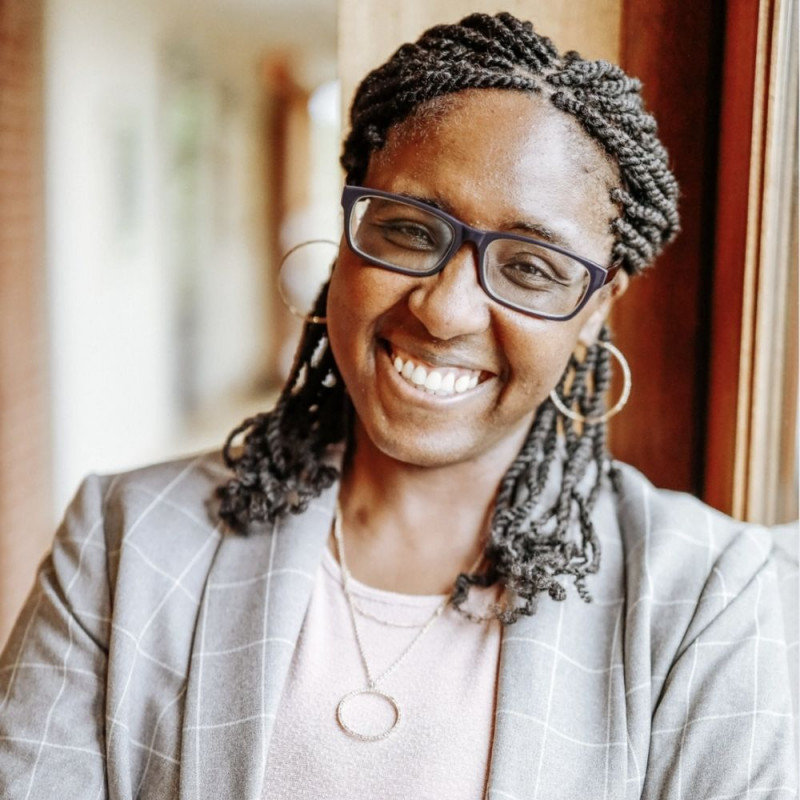
Dr. Oluwatomisin Olayinka Oredein
Oluwatomisin Olayinka Oredein is a proud daughter of the late Olugbenga and Iyabo Oredein, a tremendously blessed sister, aunty, and friend, a poet and creative writer, and Assistant Dean for Strategic Initiatives and Theological Imagination and Associate Professor in Black Religious Traditions and Constructive Theology and Ethics at Brite Divinity School in Fort Worth, TX. Her scholastic and creative work engages theopoetics, womanist thought, Black literature, social ethics, notions of liminality, and cultural inquisition. Her curiosities are drawn to the "why's" behind the "what's" humanity does and finds itself within.
She is the author of The Theology of Mercy Amba Oduyoye: Ecumenism, Feminism, and Communal Practice, a Notre Dame Press monograph that links how the events and pursuits of Mercy Amba Oduyoye's life inform her ecumenical path and the formation of African women's theology. Oredein is also the co-editor of the anthology Theopoetics in Color: Embodied Approaches to Theological Discourse the first theopoetic work featuring all racially and ethnically minoritized scholars. She is currently working on a book examining an ethic of care from a theo-ethical perspective.
Learn more about her on her website.
Course Colloquia
Not able to commit to a full course but still interested in learning more about decolonizing Christian discourse? Join us instead for an EDS Colloquium - dynamic, virtual hubs where the public are invited to witness and participate in theological discussions with renowned experts. Learn more about the colloquia below:
-
Thursday, January 29 @ 12pm Eastern / 9am Pacific - Story/Telling: Theopoetic Possibilities with Dr. Tamisha Tyler
-
Thursday, February 19 @ 12pm Eastern / 9am Pacific - How Art Can Liberate with Dr. James Howard Hill, Jr.